
This article originally appeared in Mongabay.
MOMBASA COUNTY, Kenya — Five minutes’ walk up the hilly road from the mangroves lining the tidal flats of Jomvu Creek, the sharp scent of sea water fills the air. A dozen women fill a small hall with laughter and conversation. In the coastal villages of Mombasa county, these gatherings of women to manage informal savings and loans schemes are known as chamas. But this is no ordinary chama.
Here, discussions revolve around tides, crab feed, cage repairs and mangrove seedlings. The women, aged 35-60 years, are members of Jomvu Women in Fisheries and Culture, a community-based organization determined to transform their livelihoods and their environment through an unlikely venture: mud crab farming.
Four years ago, these same women were scattered across the village. Most worked as what is known locally as mama karanga, the Swahili term for the women who fry fish over charcoal fires for sale near the beaches where fishers land their catch. Some would have been selling fresh fish, and a few were at home, tending to children and grandchildren. But dwindling fish stocks, health problems from cooking smoke and the daily uncertainty of small-scale trade had begun to take their toll.
When a Kenya Marine Fisheries and Socio-Economic Development (KEMFSED) project offered grants for blue-economy enterprises in 2021, a few of these women decided to take the opportunity.
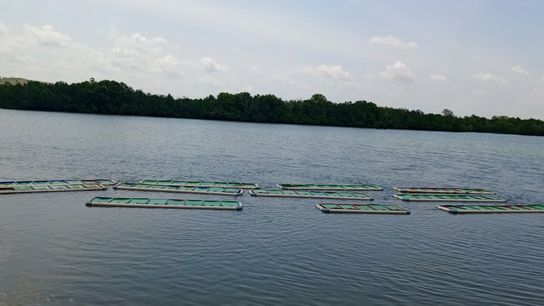
Asha Bekidusa for Mongabay
The women have converted crates used for transporting bread into cages for their crabs.
New concepts
Crab farming was a completely new concept for them. The women wrote up their proposal after attending several training sessions on small-business management and sustainable fisheries.
“Some of us had gone for workshops, so we knew how to write one,” Charity Baya, the group’s chairperson, says proudly, adding that the group later sought technical input from fisheries officers to refine their plan.
Nearly half of the group’s original 30 members dropped out, doubting the project could work. Some felt the crab venture was too unfamiliar and risky. Others doubted that women past the age of 30 — enmeshed in the many responsibilities of supporting children and managing their households — could maintain such a venture.
Fourteen women and three supportive men the group affectionately call “male champions” pressed ahead. Their persistence paid off when KEMFSED awarded them 2.7 million shillings (about $ 20,900) to establish a mud crab-fattening enterprise and construct a mangrove boardwalk through the creek.
Baya explains why the group chose to focus on crabs rather than fish. “Fish were disappearing from our plates and our income. Crabs are valuable, and there was no one farming them in Mombasa.”
The grant paid for the plastic crates, ropes to anchor them and other materials for the crab-fattening operation, as well as funded construction of the first phase of a wooden boardwalk through Jomvu Creek’s mangrove forest. The boardwalk is now 180 meters (590 feet) long, with plans to extend it farther when money can be raised for that. Once complete, it will serve both as an easier route to where their crabs grow fat in the anchored cages and as the foundation for an ecotourism enterprise, offering guided tours through the mangroves.
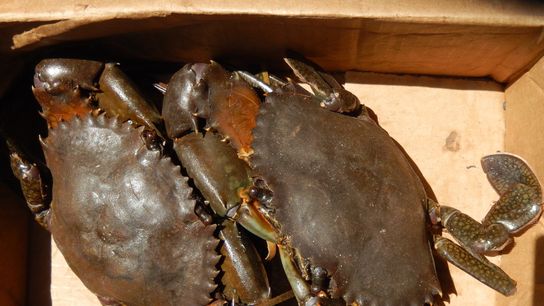
Wasini Tour Guide via iNaturalist (CC BY-NC 4.0)
Mud crabs at Wasini, Kenya: At any time, the women in Jomvu rear as many as 60 mud crabs similar to these.
Where mud crabs thrive
The Jomvu women farm mud crabs, Scylla serrata, sometimes also called the giant or mangrove crab. Known for its sweet flesh and high market value, it thrives in brackish mangrove creeks like Jomvu.
The group raises the crabs in plastic cages tethered in the tidal creeks that are mud crabs’ wild habitat. The cages are repurposed crates widely used to transport bread from bakeries to local markets. Each cage can hold two crabs, and the group currently maintains about 30 cages.
Juvenile wild crabs are collected by members and local fishers who support the project. On a good day, they can gather up to 10, and on a bad day, none. Once placed in the cages, the crabs are fed small fish, shrimp and marine snails — also gathered from the local creeks. Feeding follows a strict schedule: one day on, one day off. The crabs eat only when the cages are submerged at high tide.
It takes 6-8 weeks for the crabs to grow from their weight at capture, around 300 grams (10.6 ounces), to the desired harvest weight of 800-1,000 grams (1.75-2.2 pounds). The women sell their harvests to two main buyers: a local fisher who distributes to Mombasa markets and Crab Alive, a mud crab hatchery and aquaculture support company that works with coastal communities. The crustaceans sell for around $7/kilo.
In a good month, their sales amount to the equivalent of $310. Divided among more than a dozen, this is not a huge sum, but it’s meaningful income for the women, many of whom say they were living hand to mouth. Failing health and dwindling fish stocks had put some of them out of work entirely before they took up farming crabs.
“Before, I used to fry fish all day, coughing from the smoke,” says Mwanasiti Mwaka Chirima, the group’s treasurer, who spent 30 years as a mama karanga. “The doctor told me to stop or I would damage my health.”
“We’re training our members to become tour guides and lifeguards,” Baya explains. “We want visitors to learn about crabs, mangroves and how women are protecting both.”
Before this transformation, the most fortunate of the group’s members earned about 200 shillings ($1.50) per day from frying fish. Now, between crab sales and the planned boardwalk venture, they hope to generate more than a million shillings ($8,000) annually.
When the sea swallows the crabs
However, their road toward success has not been without struggles. Three weeks after launching the project, high tides tore their cages free of their anchoring ropes. With help from local fishers, the women found the crates nearly 2 kilometres (1.2 miles) away: empty. The sea had swallowed their first batch of crabs.
“It was heartbreaking,” says Doris Mwachai, one of the members. “We had just started, and suddenly we were back to zero.”
Since then, they’ve learned how to strengthen their anchoring systems and to check the cages more regularly. Theft has also been an issue, forcing them to take turns keeping watch. “Sometimes people steal the crabs at night,” Baya says. “We can’t always guard the cages, but we try.”
Another challenge is maintenance. The plastic crates, originally intended as trays to transport bread, degrade fairly quickly in the creeks. Half of the original sets bought four years ago are no longer usable. The Jomvu crab farmers have also improvised covers for the cages, which makes feeding their powerfully clawed captives a risky affair.
Mgeni Jumaa used to catch crabs for immediate sale. Once, while she was fishing, a crab latched onto her hand so fiercely, she had get stitches at the hospital. Now she’s a key member of the group, one of the best at finding the juveniles to put in the cages. “When I fish, I bring the small ones for free to the group to fatten,” she says. “It feels good to be part of something bigger.”
She says farming them in cages has improved her earnings. “When I used to fish crabs and sell directly, I earned maybe 500 shillings [$3.90] in a week. Now, after fattening, I can sell one crab for almost that much.”
As a group, the women have learned a lot about handling their stock. They know how best to avoid those pincers, when the tides favor feeding, which crabs to fatten and which to release.
Baya says there is more to learn. “Some of us are not fishers. We rely on training from experts, but we need better equipment and knowledge.”
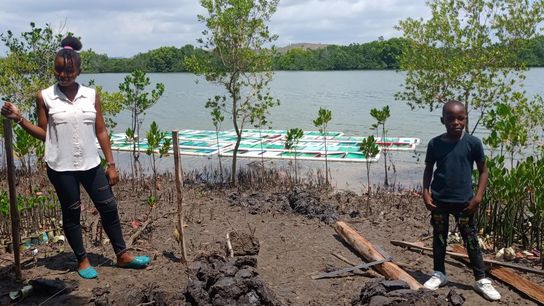
Asha Bekidusa for Mongabay
Planting mangroves near Jomvu Creek.
Healthy mangroves means healthy crabs
Beyond income, the Jomvu women see themselves as caretakers of the creek. From the start, they linked their crab farming to mangrove restoration, planting nearly 1 million mangrove seedlings. The trees stabilize the shoreline, reduce erosion and create nursery habitats for fish and crabs.
“We planted seedlings hoping to sell them,” group member Joyce Rai says, “but the market for mangrove seedlings has not been good.”
Each seedling sells for about 50 shillings ($0.40), but there are few buyers. “Even so, we are happy because we are helping restore the mangroves and the crabs feed there,” she adds with a laugh.
Ironically, the same mangroves they plant sometimes become crab food. “The challenge is that the mud crab eats these seedlings,” Rai says. “So, on one side you replace it, but for them, it’s food.”
The group understands that the creek’s health underpins their success. Healthy mangroves means healthy crabs. As they tend to their cages, they also keep an eye on the water clarity, tides and mangrove roots. Though none are scientists, their daily interactions with the ecosystem have deepened their understanding of the delicate balance between livelihoods and nature.
The women also say that simply harvesting wild crabs isn’t sustainable, especially as tides and temperatures shift due to climate change. Crab fattening allows them to add value and control their harvest cycles as they please, while also reducing the need for constant fishing pressure on the creek, which could tempt crab fishers to take some crabs even before they reach maturity and reproduce.
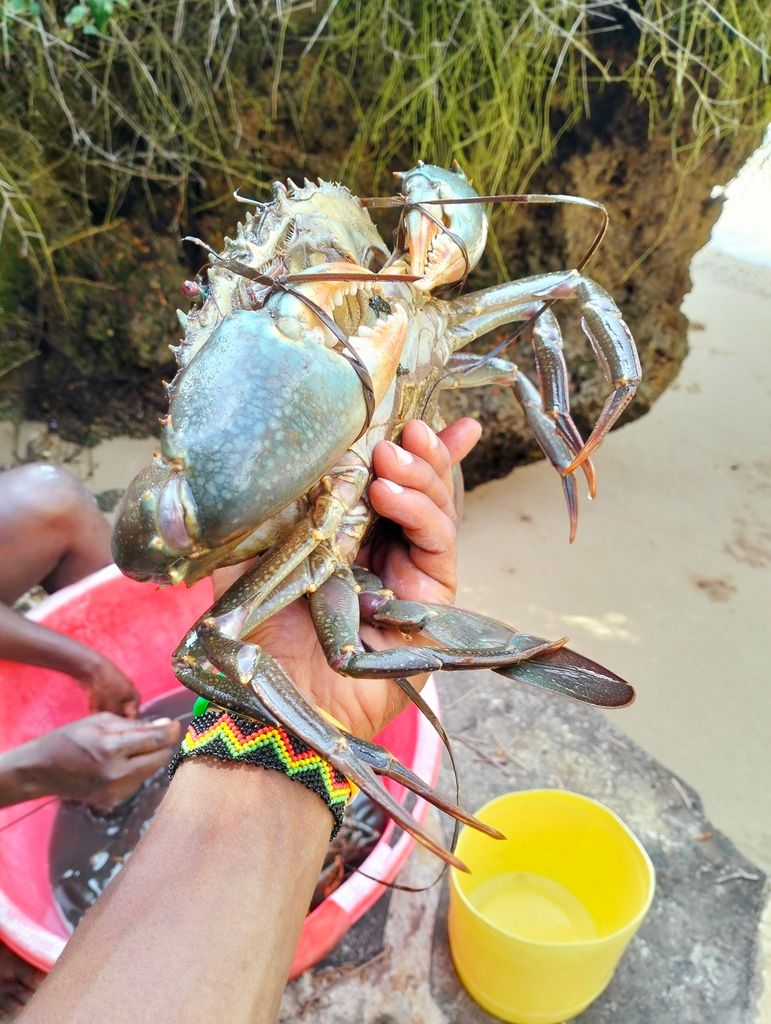
Dzivula Gube via iNaturalist (CC BY-NC 4.0)
A mud crab.
Steps toward a sustainable coast
David Mirera, principal research scientist at the Kenya Marine and Fisheries Research Institute (KMFRI), says crab farming like the Jomvu group’s represents a vital step toward sustainable coastal livelihoods.
Crab fattening reduces the post-harvest losses that plague other approaches to small-scale crab fishing, he says. “Before, fishers would collect crabs and keep them for days before selling, and many would die. Now, the women cage them right in the creek. It keeps the crabs alive and reduces waste.”
KMFRI is also working with projects like KEMFSED to create hatcheries that supply young crabs, reducing reliance on wild stocks.
Busolo Bonface, chief technical adviser for mariculture and environmental conservation in Kenya, says the scale of community-based projects like the Jomvu women’s is too small to either cause harm or generate measurable ecological impact.
“Right now, these are not commercial operations,” he says. “They’re using local cages, feeding with small fish or snails, so the nutrient load on the water is very low. But if crab farming expands, we’ll need clear environmental guidelines to avoid pollution and plastic waste.”
He says the presence of marine snails in the creeks in areas adjacent to the women’s cages is an indication that the water quality remains healthy.
He also approves of the women’s efforts to replant mangroves, explaining that there is a natural relationship between crabs and mangroves. The crabs dig burrows that soften the soil, which helps mangrove seedlings take root. And the mangroves, in turn, provide food and shelter for the crabs. “So, it’s a two-way benefit or a symbiotic relationship, he explains.
“Mangroves are the lifeblood of these creeks. They trap sediment, filter pollution and give shelter to young crabs and fish. Without them, the shoreline would simply collapse,” he says.
“If you visit their creek and see how carefully they manage those cages, how they’ve connected it to mangrove restoration, it’s impressive. They just need more training and technical support to make it sustainable in the long run.”
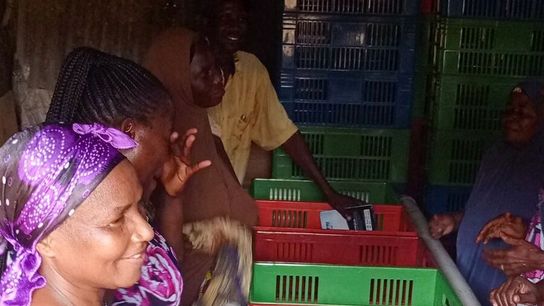
Asha Bekidusa for Mongabay
Members of the Jomvu Women in Fisheries collective.
Women leading a blue economy model
Despite its relatively modest scale, just 30 active cages, the Jomvu women see their enterprise as a model for others. “We are not just earning money,” says Chirima. “We are showing that women can lead in the blue economy.”
Once the boardwalk opens, they plan to host school groups, tourists and researchers. The guided tours will showcase crab habitats, mangrove ecology and local women’s roles in conservation. They envision selling crafts, seafood dishes and mangrove seedlings to visitors.
Sustaining and expanding the project will require capital, training and consistent markets. Half the cages need replacing now; new protective gear and better ropes are costly. But the women remain optimistic.
“When we started, people laughed,” Baya recalls. “Now, those same people come to ask how they can join us.”
The Jomvu initiative is part of a larger movement of women asserting themselves in Kenya’s fisheries sector. Mercy Mghanga, founder of the Coastal Women in Fisheries Entrepreneurship network and long-time chairperson of the beach management unit here, has watched the group grow.
“For years, women were the backbone of the fisheries value chain, drying, frying and selling fish but rarely recognized as entrepreneurs,” Mghanga says. “Culture kept them from owning boats or taking loans without a man’s consent.”
Her organization now connects more than 2,000 women across the coastal region, supporting access to credit, training and markets. “Jomvu Women in Fisheries and Culture are a good example of what women can do when given opportunity,” she says.
Mghanga says education and collaboration will be key. “If a woman is married at 16 years, will she go back to school?” she asks. “We must give her other paths to learn, to earn and to lead.”
Whether crab farming directly improves Jomvu Creek’s ecosystem remains uncertain, but its indirect effects are already visible. The mangrove seedlings take root, the shoreline stabilizes and more residents talk about conservation.
The women have become local stewards, planting mangroves, rescuing stranded cages and teaching their children about sustainable fishing. For them, conservation is not an abstract concept; it has become a lived reality, integrated into their livelihoods.
“If the mangroves die, the crabs go,” Baya says. “And if the crabs go, our business dies too.”
As the tide rises in Jomvu Creek, water laps gently against the mangrove roots. The women, barefooted, wade in to check their cages. The work is muddy, slow, and sometimes frustrating. But in each crab they fatten and each mangrove seedling they plant in the muddy banks, they see the promise of a future where women’s hands nurture both livelihood and life along Kenya’s coast.